
From Hand-Pulled to Robot-Made: How Noodle Robots Are Preserving Craft at Scale
Summary:Noodle-making is a craft that's hard to staff. Here's how noodle robots preserve the hand-pulled tradition — consistent texture, faster service, and around-the-clock operation — for fast-casual and food-court operators.
From Hand-Pulled to Robot-Made: How Noodle Robots Are Preserving Craft at Scale
Industry insight | September 2026
Lead — Few foods carry as much craft as noodles. For centuries, the perfect bowl has depended on a master's hands — the kneading, the pulling, the timing — skills passed down over decades. But that same craft is exactly what makes noodle shops so hard to staff and scale. A new generation of noodle robots is changing the equation, preserving the tradition's consistency while removing its labor bottleneck.
1. A Craft That Doesn't Scale
Hand-pulled noodles are the product of years of training. A skilled noodle master can turn dough into uniform strands through rhythm and feel — but that expertise is scarce, expensive, and impossible to clone. For a restaurant chain that wants the same bowl in ten locations, the math rarely works: there aren't enough masters to go around.
That's the tension at the heart of noodle automation: how do you keep the craft while losing the dependency on a single pair of hands?
2. The Staffing Gap in the Noodle Shop
Ask any fast-casual noodle operator what keeps them up at night, and it's rarely the recipe — it's the roster. Noodle-making is physically demanding, repetitive, and unforgiving of a rushed apprentice. Skilled cooks command high wages, and when one leaves, the consistency of the bowl leaves with them. Peak hours — lunch and dinner — put the entire kitchen under strain.
The result is a craft that operators love but can't reliably reproduce at volume.
3. The Noodle Robot: Precision Where It Matters
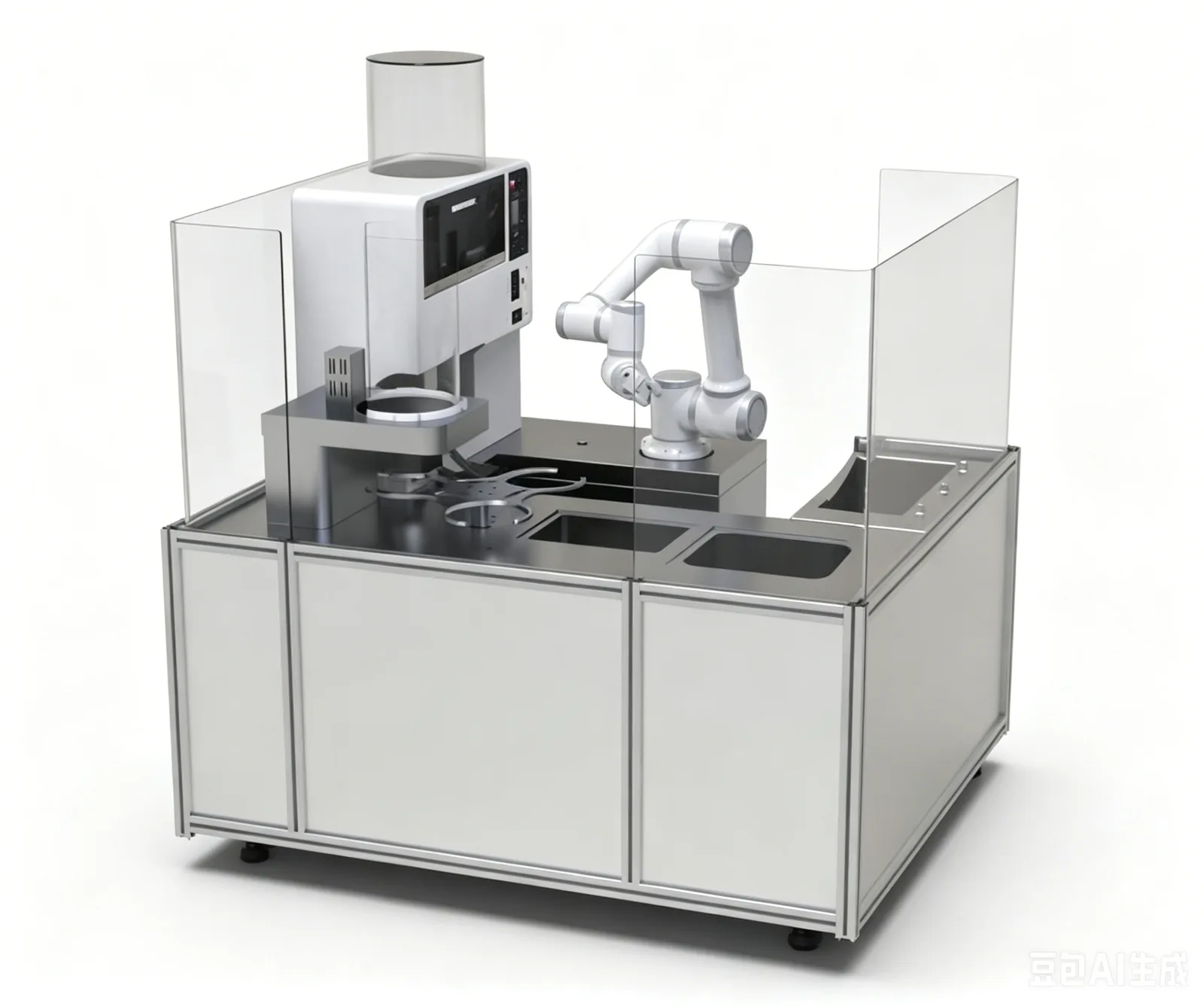
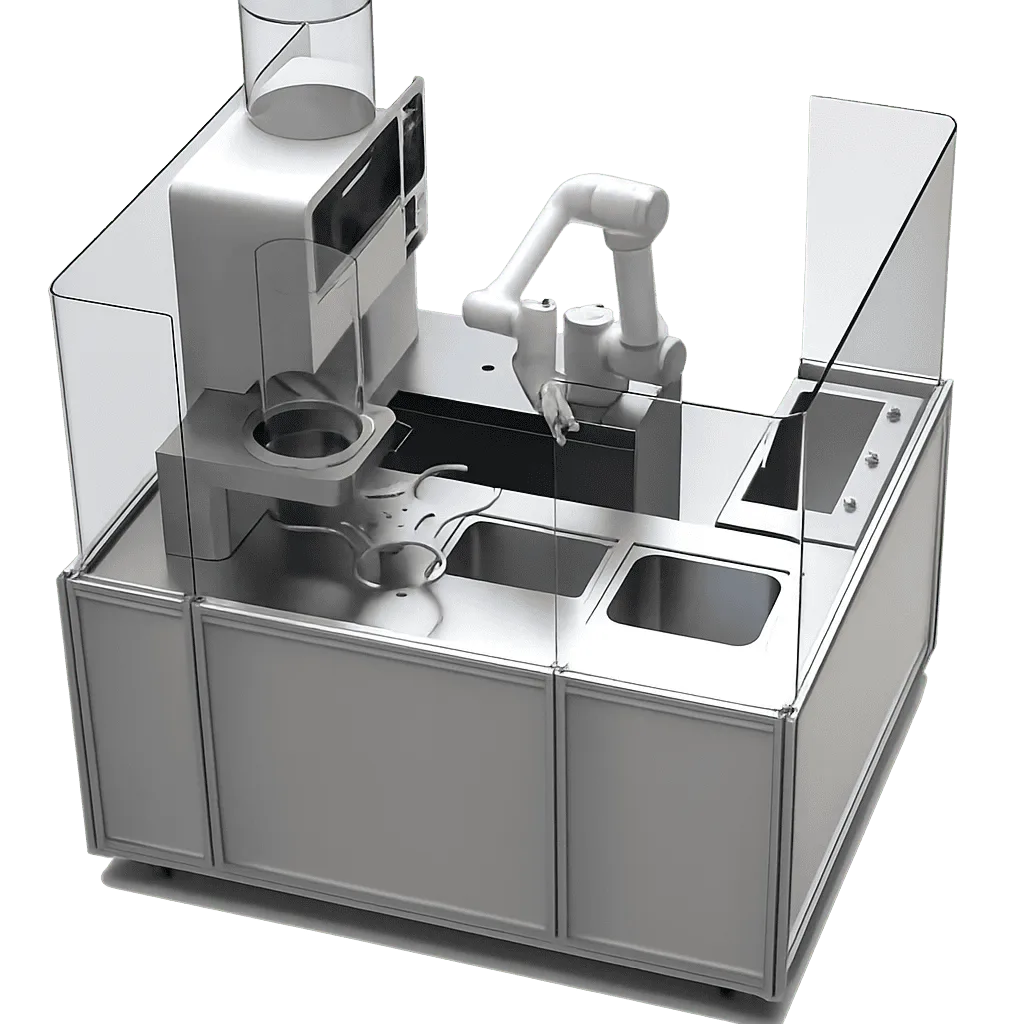
A noodle robot automates the hardest parts of the process — kneading, portioning, and shaping — with machine precision. The dough is handled to exact specifications every time, so texture, thickness, and portion stay uniform from the first bowl to the thousandth. And because it runs unattended, the robot keeps producing through peak hours and off-peak hours alike.
Crucially, it doesn't replace the recipe — it replaces the repetitive labor, freeing human staff for seasoning, plating, and service.
4. Built for the Venues That Serve Noodles Every Day
The noodle robot fits wherever noodles are the backbone of the menu:
- Fast-casual noodle chains — the same bowl, every location, every shift.
- Food courts and canteens — high volume at lunchtime without a large kitchen crew.
- Hotels and catering — noodle stations that run without a dedicated specialist.
- Convenience and retail — fresh noodle options in spaces with no traditional kitchen.
5. The Same Economics, a Familiar Craft
The business case follows the pattern operators now recognize across food automation: a machine that replaces two to three staff, runs around the clock, and reaches payback in six to eighteen months — consistent with the figures MOTON Robotics reports across 5,000+ deployments in 40+ countries. What's different is the subject: a craft that, for the first time, can be preserved and scaled at once.
(This article is an industry observation and does not constitute investment advice. Figures are drawn from public materials and company disclosures.)
Frequently Asked Questions
What products does MOTON Robotics offer?
MOTON offers intelligent robots for food and beverage automation, including the Latte Master coffee robot series (B/S/V), AI cocktail bartender, milk tea robot, ice cream robot, noodle robot, and smart fried food robot.
Where can MOTON robots be deployed?
Our robots are deployed across 40+ countries in office buildings, shopping malls, hotels, hospitals, schools, airports, gas stations, scenic spots, and industrial parks.
What is the typical ROI of a MOTON robot?
ROI typically ranges from 6–18 months depending on deployment scenario and model. For example, a B-Series coffee robot can replace 2–3 staff and produce 200+ cups daily, significantly reducing labor costs.
Does MOTON provide after-sales support?
Yes, we provide 24/7 global after-sales support including remote diagnostics, spare parts supply, and on-site technical assistance. All products include a one-year warranty.
How can I get a quote or demo?
Contact us via the website form or call +86 159 9823 3305. We offer virtual demos and on-site visits, and will customize a solution and quote based on your needs.