
From Novelty to Necessity: AI Coffee Robots Answer the Global Hospitality Labor Crisis
Summary:As labor shortages and rising costs reshape global hospitality, AI coffee robots are moving from novelty to necessity. MOTON Robotics' Latte Master series delivers 200+ cups daily while replacing 2-3 staff.
From Novelty to Necessity: AI Coffee Robots Answer the Global Hospitality Labor Crisis
Industry insight | August 2026
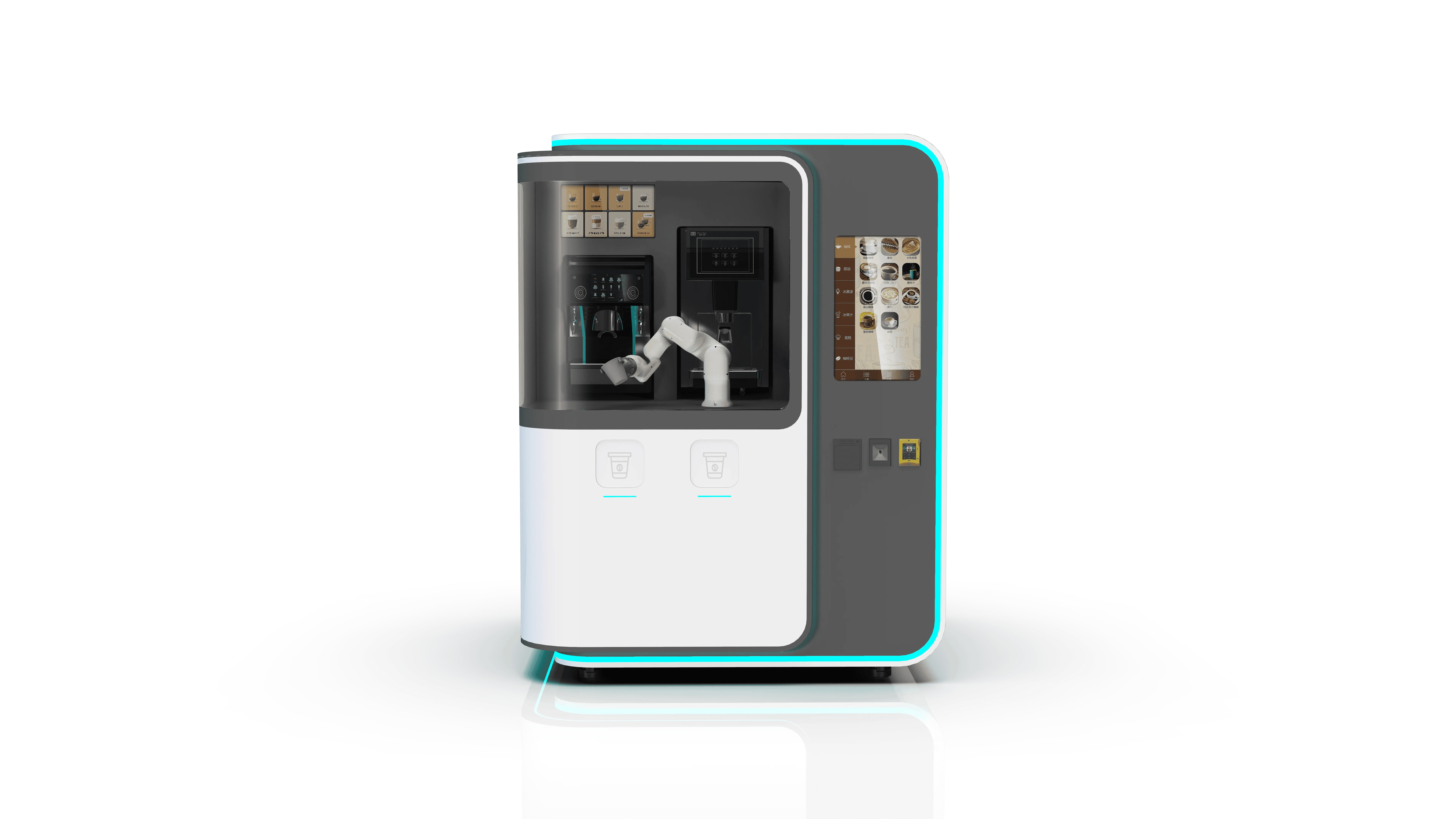
Lead — Caught between relentlessly rising labor costs and a consumer who expects a consistently excellent cup of coffee at any hour, the global food & beverage industry is accelerating toward automation. At the front of this wave is not a single gadget, but a machine that captures the craft of a barista inside a robotic arm and an algorithm — the AI coffee robot.
1. The Labor Crisis: A Shared Pain Point for Global Hospitality
"Hiring is hard. Keeping people is harder." This is now the most common complaint among F&B operators from North America to Southeast Asia, and from Western Europe to the Middle East.
Traditional cafés and restaurants depend heavily on frontline staff — baristas, bartenders, and tea makers. These roles take long to train, deliver inconsistent output, and suffer chronically high turnover. For a store owner, the biggest fear is rarely "we didn't sell enough today" — it is "an employee didn't show up tomorrow."
The consequences are compounding:
- Labor costs keep climbing, eating into already-thin margins;
- Quality drifts cup to cup — the same latte can taste different depending on who is behind the bar;
- Opening hours are capped by staffing — nights, holidays, and peak periods become chronic shortages;
- Expansion stalls — opening a second store means first assembling a reliable team.
When people become the least predictable variable, operators naturally turn to automation that never calls in sick, never quits, and never compromises on quality.
2. From "Machines Replacing People" to the "AI Bar": The New Unmanned Retail Frontier
Unmanned retail has had its ups and downs over the years. But one shift is unmistakable: the center of gravity in automation is moving from "the vending shelf" to "the serving bar."
Coffee is the ideal vehicle for this shift — and for a simple reason: it is high-frequency, high-repeat, highly standardized, and carries healthy margins. It is, in short, a category built for automation.
The result is that "unmanned coffee stations" and "robotic coffee kiosks" are now appearing in places that were once impossible: office lobbies, shopping mall atriums, hospital waiting areas, airport terminals, gas-station convenience stores, and school campuses. An "AI bar" that needs no permanent barista — yet delivers consistent output around the clock — has become the most practical anchor for the new retail space.
For operators, its value is not spectacle. It is one word: certainty.
3. The Technology Leap: Latte Art and Consistency Behind the "Intelligence"
If a machine only "dispenses coffee," it is a vending machine. The real dividing line is whether the robot can reproduce the craft.
- Latte art — once considered the last irreplaceable skill of a human barista — can now be replicated precisely by dual robotic arms, from a simple heart to complex patterns, stably and repeatably;
- Consistency — temperature, grind size, extraction time, and milk-foam ratio are all locked in by algorithms, so cup #1 and cup #1,000 are virtually identical;
- Multi-category synergy — the same robotic arm and control system extends into cocktails, milk tea, ice cream, noodles, and fried food, forming a full "unmanned kitchen" capability.
This is the point: the race in AI food-service robots is no longer about "can it move," but "can it stably, at scale, replace an entire set of human actions."
4. MOTON's Answer: Automation Behind Every Cup
In this wave, MOTON Robotics — a specialist in food & beverage service robots — has delivered its own answer.
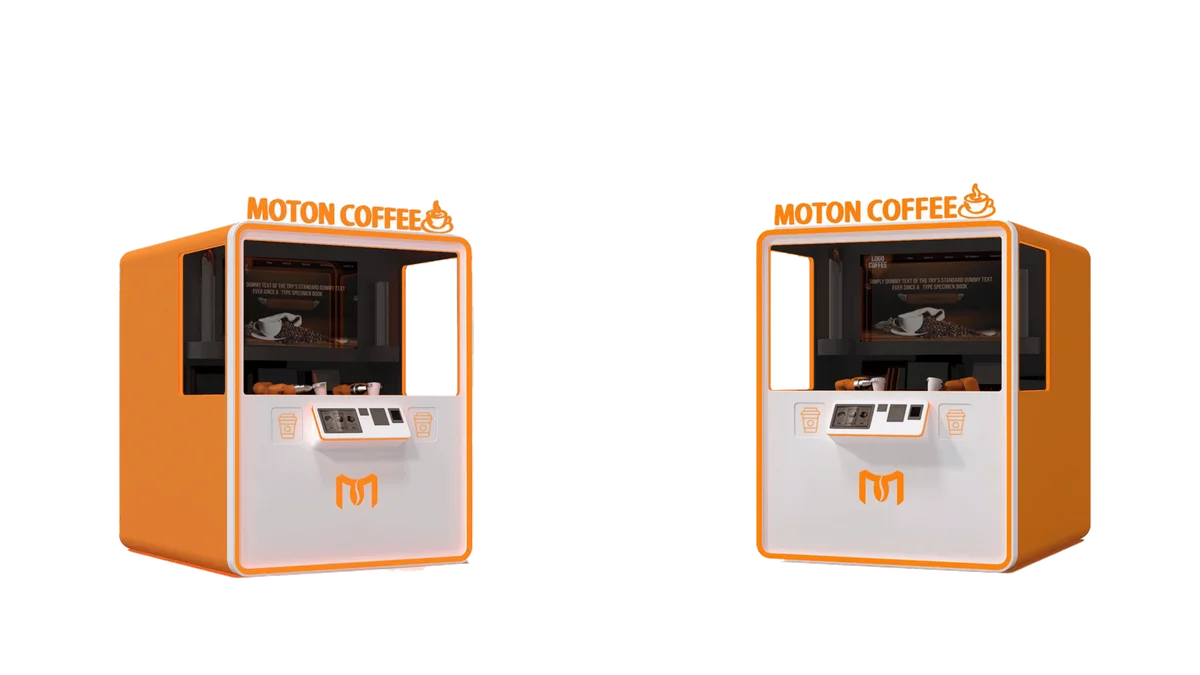
Centered on the Latte Master latte-art robot series (B / S / V), MOTON has built a complete product matrix spanning "coffee + cocktails + milk tea + ice cream + noodles + fried food." According to its published materials:
- One coffee robot replaces 2–3 staff and stably produces 200+ cups per day;
- Payback period typically ranges from 6 to 18 months;
- The products are deployed across 40+ countries and regions, with 5,000+ units installed to date.
Behind these numbers is MOTON's direct response to real customer pain points: one machine that solves four problems at once — hiring difficulty, staff retention, inconsistent output, and hard-to-replicate expansion.
From commercial cafés to office lobbies, from scenic spots to airports, MOTON's robots are turning "unattended, consistent output" from a concept into daily operations.
5. Going Global: A Window of Opportunity for Chinese Food Robotics
One signal worth watching: this wave of F&B automation is global.
Customers from Mexico, Türkiye, Pakistan, Hungary, South Korea, and Australia are actively seeking unmanned retail coffee robots — and what they now care about is no longer "does the machine work," but "can it be delivered locally, deployed quickly, and maintained reliably over the long term."
This puts Chinese food-robotics companies at a double-window of opportunity: overseas markets face even higher labor costs and stronger appetite for automation, while China offers cost and supply-chain advantages in smart manufacturing.
Whoever can get "product + localization + service" right at the same time is most likely to seize the lead in this global unmanned-dining wave.
Conclusion: A Note to Operators
Automation is not the goal — certainty is. When "people" become the most uncertain variable in a business, hedging with automation is becoming the rational choice for a growing number of operators.
For those considering a move, three pieces of advice:
- Do the math first: focus on payback period and cost-per-cup, not just the sticker price;
- Prioritize consistency: the core value of automation is stable output — choose a solution that "fixes the craft," not one that merely "dispenses a cup";
- Leave room to scale: favor vendors with multi-category expansion, remote maintenance, and localized service, so future multi-store replication is covered.
(This article is an industry observation and does not constitute investment advice. Figures are drawn from public materials and company disclosures.)
Frequently Asked Questions
What products does MOTON Robotics offer?
MOTON offers intelligent robots for food and beverage automation, including the Latte Master coffee robot series (B/S/V), AI cocktail bartender, milk tea robot, ice cream robot, noodle robot, and smart fried food robot.
Where can MOTON robots be deployed?
Our robots are deployed across 40+ countries in office buildings, shopping malls, hotels, hospitals, schools, airports, gas stations, scenic spots, and industrial parks.
What is the typical ROI of a MOTON robot?
ROI typically ranges from 6–18 months depending on deployment scenario and model. For example, a B-Series coffee robot can replace 2–3 staff and produce 200+ cups daily, significantly reducing labor costs.
Does MOTON provide after-sales support?
Yes, we provide 24/7 global after-sales support including remote diagnostics, spare parts supply, and on-site technical assistance. All products include a one-year warranty.
How can I get a quote or demo?
Contact us via the website form or call +86 159 9823 3305. We offer virtual demos and on-site visits, and will customize a solution and quote based on your needs.